pizza delight case study

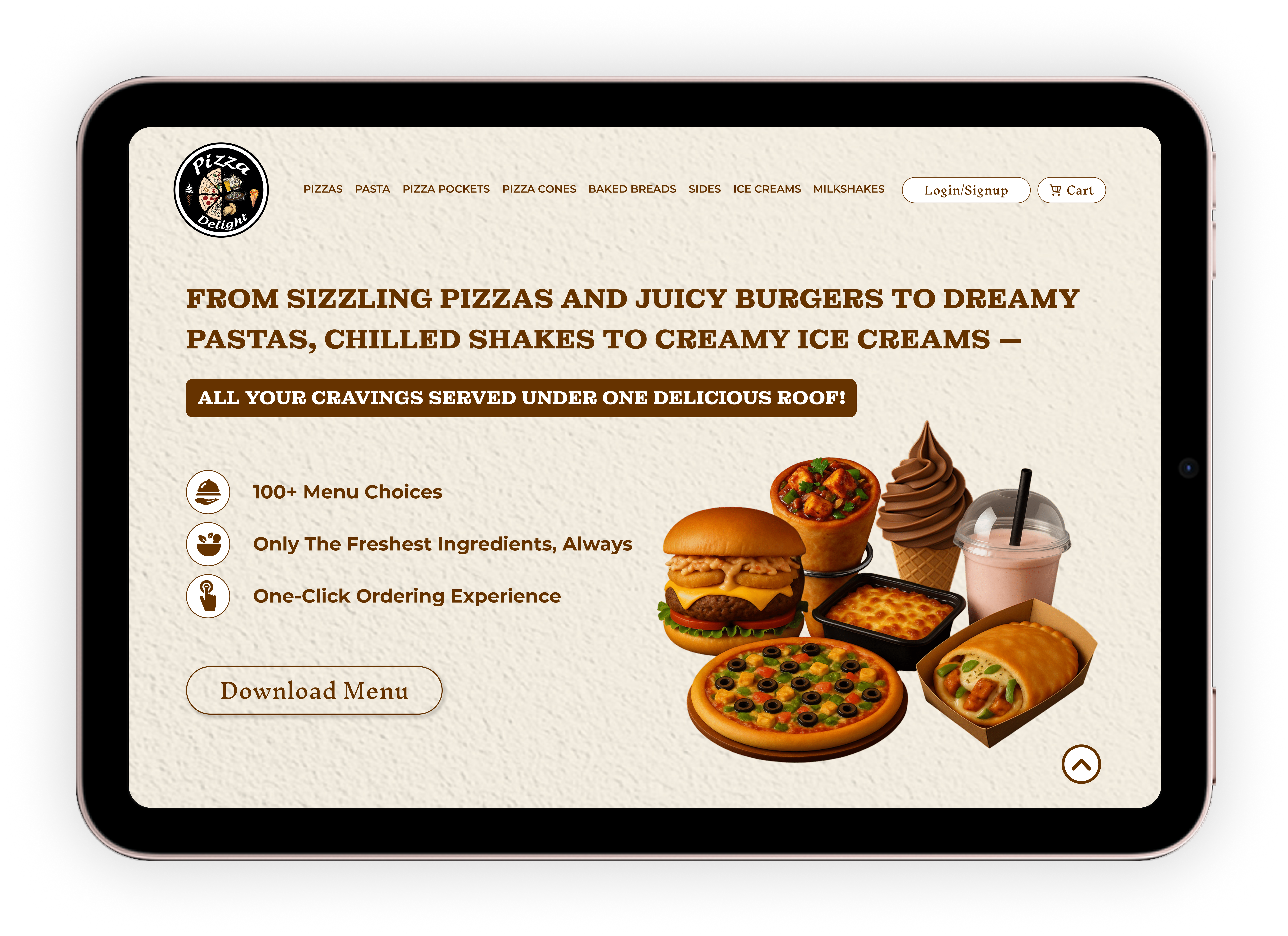
In today’s fast-paced food industry, a seamless online experience can make or break a brand. Pizza Delight, a popular local pizzeria known for its diverse gourmet offerings and loyal customer base, recognized the need to upgrade its digital presence.

This case study explores the strategy, design, and development process behind building a conversion-driven, mobile-first website for Pizza Delight.

8 Weeks

project duration

+60

Screens

pizza delight case study

In today’s fast-paced food industry, a seamless online experience can make or break a brand. Pizza Delight, a popular local pizzeria known for its diverse gourmet offerings and loyal customer base, recognized the need to upgrade its digital presence.

This case study explores the strategy, design, and development process behind building a conversion-driven, mobile-first website for Pizza Delight.

8 Weeks

project duration

+60

Screens

tools & technologies used:

Designed By:

The brain burners

tools & technologies used:

Designed By:

The brain burners

pizza delight case study

In today’s fast-paced food industry, a seamless online experience can make or break a brand. Pizza Delight, a popular local pizzeria known for its diverse gourmet offerings and loyal customer base, recognized the need to upgrade its digital presence.

This case study explores the strategy, design, and development process behind building a conversion-driven, mobile-first website for Pizza Delight.

8 Weeks

Project Duration

+ 60

Screens

tools & technologies used:

Designed By:

The Brain Burners

Project overview

The goal was simple: increase online orders, showcase their signature pizzas, and create an intuitive user journey that reflects the warmth and quality of the brand. From user research and UI/UX design to technology stack and performance optimization, every element was crafted to serve one purpose turning casual visitors into returning customers.

Project overview

The goal was simple: increase online orders, showcase their signature pizzas, and create an intuitive user journey that reflects the warmth and quality of the brand. From user research and UI/UX design to technology stack and performance optimization, every element was crafted to serve one purpose turning casual visitors into returning customers.

design thinking process

Empathize

Define

Ideate

Design

Test

Empathize

Define

Ideate

Design

Test

Empathize

Define

Ideate

Design

Test

Empathize

This step involves connecting with the audience, comprehending their needs, gauge the issues they face, and gain a deeper, personal understanding of the issues involved—as well as their experiences and motivations

Method: User Interview, Research

Define

The step involves assembling the details collected during the previous phase. It also involves analyzing and processing the observations to define the core problems.

Method: Observation

Ideate

This step is all about “thinking outside the box” and find possible ways to view the problem and identify innovative solutions to the problem statement.

Method: Brainstorming

Design

This is an experimental step with a goal to identify possible solution for each problem found.

Method: Design

Test

This step is all about testing the solutions and using the results to redefine one or more further problems.

Method: User Interview

target audience

Pizza delight is primarily designed to appeal to a broad yet specific segment of users who value control, creativity, and convenience in their food choices. Young adults and college students (ages 18–25) are a key demographic they’re highly tech-savvy, enjoy experimenting with flavors, and often seek budget-friendly yet unique food experiences.

For them, customization offers a sense of fun and personalization that aligns with their lifestyle. Families with children also benefit greatly, as parents often need to cater to individual preferences or dietary needs within the household. The ability to customize ensures everyone gets exactly what they want, making Pizza Delight a go-to for family meals.

problem statement

Today’s pizza lovers crave customization, variety, and visual excitement not just another boring menu list. But Pizza Delight’s current user interface offers a static, one-size-fits-all experience, leaving customers underwhelmed and uninspired.
There’s no intuitive way to build your own pizza, explore regional or fusion flavors, or discover limited-time offerings all of which modern foodies actively seek. The lack of dynamic visual cues, personalization, and engaging product presentation is causing drop-offs, low average order values, and minimal user delight.

Customers couldn’t visualize ingredients, compare flavors, or customize their orders without friction. The outdated design didn’t support modern user behaviors like quick reordering, mobile-first interaction, or personalized upsells leading to high bounce rates, cart abandonment, and missed revenue opportunities.

UX research

Pizza services is at the top of the tree in their services but users often face some problems. To learn from the user’s perspective, We did some research and asked some questions from the users to understand the problem statement and their experience.

qualitative research

Are ingredient options clearly described
and visually appealing?

What frustrations (if any) do users encounter while customizing their order?

Are ingredient options clearly described
and visually appealing?

Do users understand how their choices affect the price in real-time?

Can users quickly find what they’re looking for (e.g., popular pizzas, deals, custom options)?

What frustrations (if any) do users encounter while customizing their order?

Is the mobile navigation intuitive for first-time visitors?

How long does it take for users to place an order from the homepage on mobile?

quantitative research

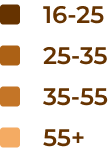
What is your age range?

What is your gender?

What is your marital status?

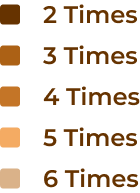
How many times you order a week?

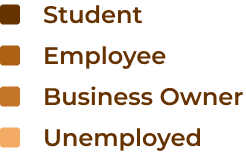
what is your occupation?

what payment method do you prefer?

user persona

A user persona is a semi-fictional, research-based profile that represents a key segment of your target audience. It captures the goals, behaviors, needs, motivations, frustrations, and demographic traits of real users — giving your design, development, and marketing teams a clear picture of who they are building for and why.

Aarav

Occupation: College Student
Location: Pune, India
Tech Comfort: High
Devices: Android phone

Bio:

Aarav is a third-year engineering student juggling online classes, coding assignments, and late-night group projects. He often skips cooking and relies on food delivery apps for convenience. A self-proclaimed foodie, he enjoys exploring new pizza flavors and likes having full control over toppings and crusts. Aarav orders food 3–4 times a week and often recommends good finds to his friends.

Pains:

  • Gets frustrated with slow,  clunky food ordering websites
  • Hates when customization options are limited or unclear
    Finds checkout processes with too many steps annoying
  • Finds checkout processes with too many steps annoying

Gains:

  • Wants a pizza platform that offers fun, interactive customization
  • Prefers quick reordering of his favorites during study breaks
  • Enjoys combo offers or student discounts

Behavior:

  • Scrolls through menus late at night while watching YouTube
  • Compares deals between food apps before placing order
  • Frequently shares screenshots of crazy pizza creations with his friends
  • Prefers using Google Pay or UPI over card payments
  • Leaves a review only if the food or service surprises him (good or bad)

“I don’t want a boring pizza give me full control and let me build something wild. Half tandoori, half cheese burst with extra olives? Yes, please!”

empathy mapping

Empathy mapping is a UX tool used to visualize what a user says, thinks, feels, and does to gain a deeper understanding of their behavior, motivations, and pain points. It helps teams design more user-centered products by stepping into the user’s shoes and capturing their real-world experience.

says

  • I just want to customize my pizza the way I like it no compromises.
  • Why are food apps so complicated sometimes? I just want to eat.
  • If it takes more than 3 clicks, I’m out.
  • I always go for something new… same old menus are boring.

says

  • I just want to customize my pizza the way I like it no compromises.
  • Why are food apps so complicated sometimes? I just want to eat.
  • If it takes more than 3 clicks, I’m out.
  • I always go for something new… same old menus are boring.

says

  • I just want to customize my pizza the way I like it no compromises.
  • Why are food apps so complicated sometimes? I just want to eat.
  • If it takes more than 3 clicks, I’m out.
  • I always go for something new… same old menus are boring.

Does

  • Scrolls food apps late at night
  • Customizes pizzas using all possible options — just to explore
  • Uses coupons and compares prices before checkout
  • Reorders previous combos for convenience during exams.

thinks

  • Is this pizza worth the price?
  • How fast can I get it delivered? I’m starving
  • Can I try something different today without messing it up?
  • Why can’t they remember my last order?
  • Should I split this order with my roommate?

Does

  • Scrolls food apps late at night
  • Customizes pizzas using all possible options — just to explore
  • Uses coupons and compares prices before checkout
  • Reorders previous combos for convenience during exams.

thinks

  • Is this pizza worth the price?
  • How fast can I get it delivered? I’m starving
  • Can I try something different today without messing it up?
  • Why can’t they remember my last order?
  • Should I split this order with my roommate?

Does

  • Scrolls food apps late at night
  • Customizes pizzas using all possible options — just to explore
  • Uses coupons and compares prices before checkout
  • Reorders previous combos for convenience during exams.

thinks

  • Is this pizza worth the price?
  • How fast can I get it delivered? I’m starving
  • Can I try something different today without messing it up?
  • Why can’t they remember my last order?
  • Should I split this order with my roommate?

FEELS

  • Excited when the customization is fun and visual
  • Irritated by long forms or glitchy mobile interfaces
  • Anxious when delivery is delayed
  • Empowered when he has full control over his order
  • Satisfied and loyal when the experience is fast, intuitive, and tasty

FEELS

  • Excited when the customization is fun and visual
  • Irritated by long forms or glitchy mobile interfaces
  • Anxious when delivery is delayed
  • Empowered when he has full control over his order
  • Satisfied and loyal when the experience is fast, intuitive, and tasty

FEELS

  • Excited when the customization is fun and visual
  • Irritated by long forms or glitchy mobile interfaces
  • Anxious when delivery is delayed
  • Empowered when he has full control over his order
  • Satisfied and loyal when the experience is fast, intuitive, and tasty

ideate

During the Ideate phase, we focused on generating innovative, user-centric solutions based on key insights from user research and empathy mapping. Our primary goal was to enhance the online ordering experience by making it more interactive, personalized, and mobile-friendly especially for tech-savvy users like college students.

We conceptualized features like a “Build Your Own Pizza” tool with real-time visuals and pricing, quick order shortcuts such as “Repeat Last Order,” and a flavor discovery engine with smart filters like “Spicy” or “flavorful.” To boost engagement, we introduced ideas like gamified combo rewards and real-time personalized recommendations. These concepts were designed to reduce friction, increase emotional engagement, and ultimately drive higher conversion and retention rates, laying the groundwork for the prototype and design phase that followed.
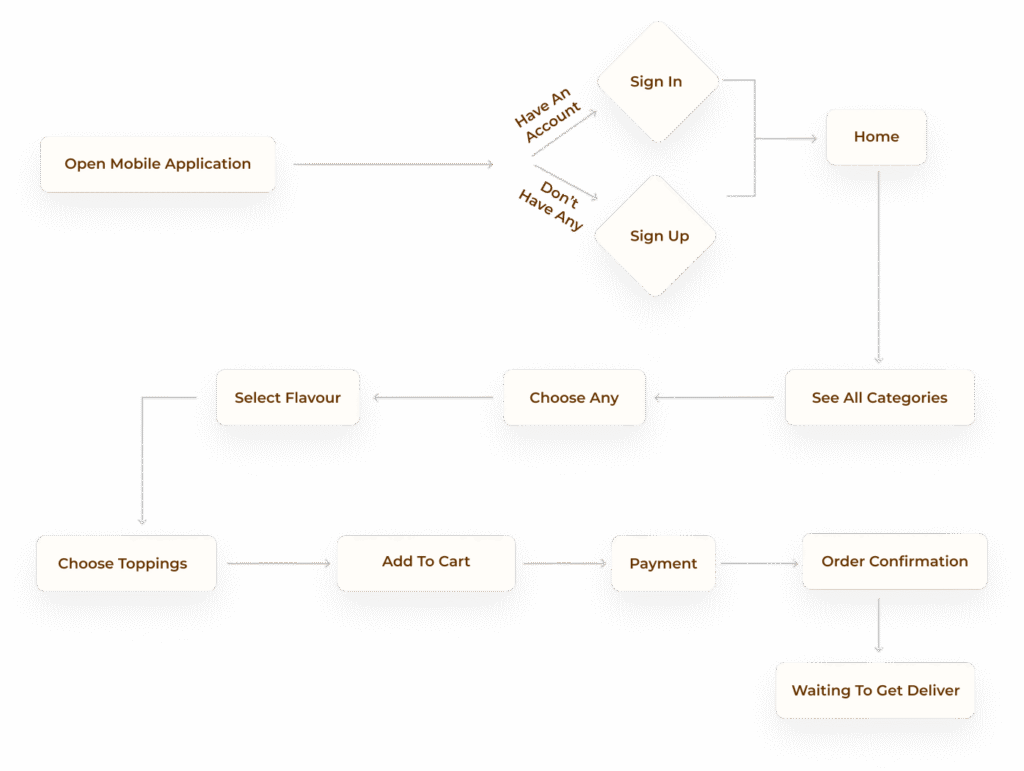
User journey

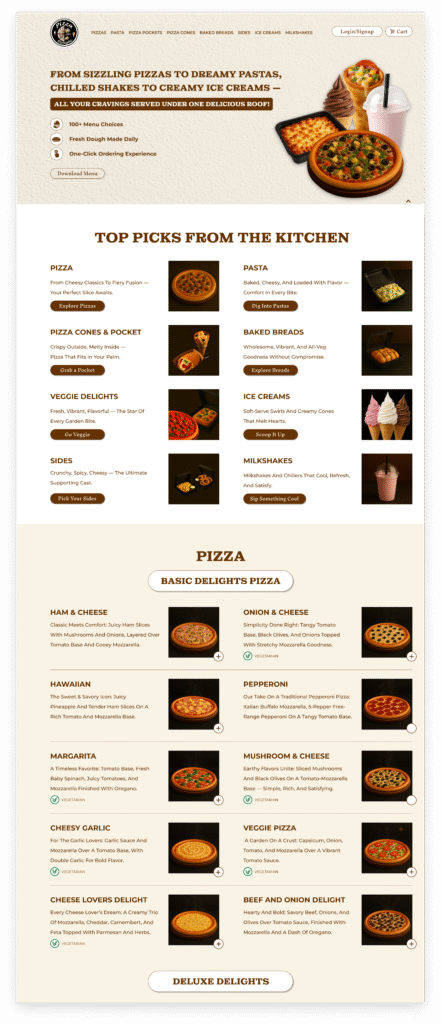
design (homepage)

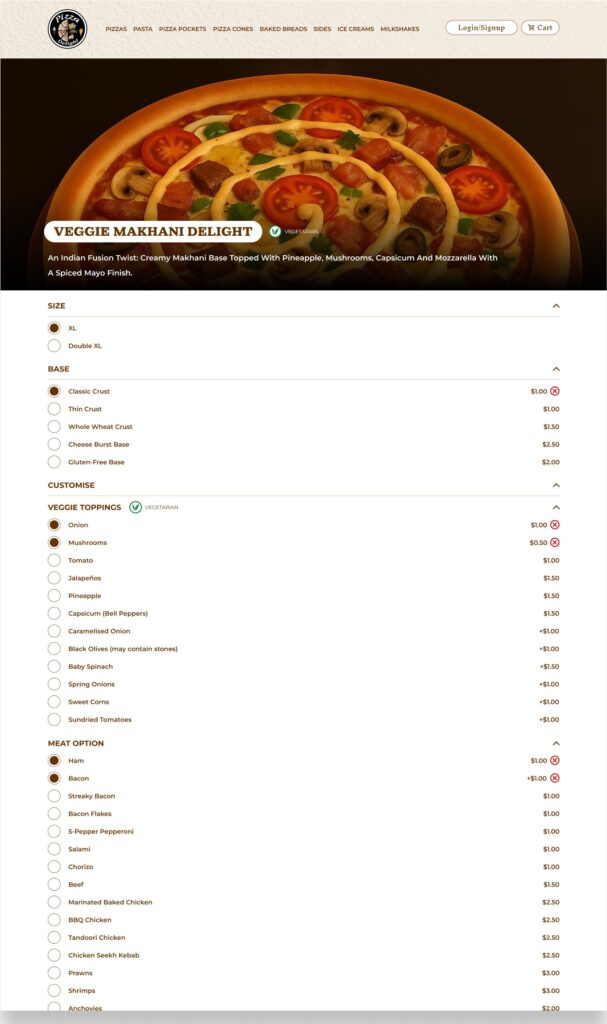
veg makhani delight pizza

Design System

Colors

Primary Color

Secondary Color

Neutral/accent colors

typography

Montagu Slab


Regular      Medium       Semibold      Bold

ABCDEFGHIJKLMNOPQRSTUVWXYZ

abcdefghijklmnopqrstuvwxyz

0123456789

typography

Montagu Slab


Regular      Medium       Semibold      Bold

ABCDEFGHIJKLMNOPQRSTUVWXYZ

abcdefghijklmnopqrstuvwxyz

0123456789

development process

Our pizzadelight website was developed through a structured 8-step process. Each step focused on creating a seamless, responsive, and smart dining experience for customers and restaurant.

requirement gathering

We identified the core needs of three user groups: diners, new restaurant owners, and existing partners. This helped define clear goals, features, and expectations.

Research and Analysis

We analyzed competitor platforms, studied user behaviors, and gathered feedback to validate ideas and highlight opportunities for innovation in restaurant discovery and booking.

requirement gathering

We identified the core needs of three user groups: diners, new restaurant owners, and existing partners. This helped define clear goals, features, and expectations.

Research and Analysis

We analyzed competitor platforms, studied user behaviors, and gathered feedback to validate ideas and highlight opportunities for innovation in restaurant discovery and booking.

UI/UX Design

Wireframes and high-fidelity designs were created using Figma. The UI focused on simplicity, trust, and warmth — with a color scheme led by to reflect a rich dining atmosphere.

Architecture Planning

We chose Next.js as our framework for its performance, scalability, and SEO benefits. Folder structure, routing strategy, and component logic were planned before development.

UI/UX Design

Wireframes and high-fidelity designs were created using Figma. The UI focused on simplicity, trust, and warmth — with a color scheme led by to reflect a rich dining atmosphere.

Architecture Planning

We chose Next.js as our framework for its performance, scalability, and SEO benefits. Folder structure, routing strategy, and component logic were planned before development.

Development

Frontend was developed using React (via Next.js). Core functionalities like reservation logic, restaurant onboarding, and dashboard components were built as reusable modules.

Testing & Quality Assurance

We performed device testing, usability checks, and cross-browser validation to ensure smooth booking flows, fast load times, and bug-free interactions.

Development

Frontend was developed using React (via Next.js). Core functionalities like reservation logic, restaurant onboarding, and dashboard components were built as reusable modules.

Testing & Quality Assurance

We performed device testing, usability checks, and cross-browser validation to ensure smooth booking flows, fast load times, and bug-free interactions.

Deployment

The site was deployed on Vercel for optimal performance and seamless CI/CD. We ensured the platform was mobile-optimized and ready for real user traffic.

Post-Launch Support

We continuously monitor usage behavior, collect feedback, and plan for feature enhancements based on real-world needs — helping restaurants and diners get more out of DineFirst.

Deployment

The site was deployed on Vercel for optimal performance and seamless CI/CD. We ensured the platform was mobile-optimized and ready for real user traffic.

Post-Launch Support

We continuously monitor usage behavior, collect feedback, and plan for feature enhancements based on real-world needs — helping restaurants and diners get more out of DineFirst.

Final Solutions

for users

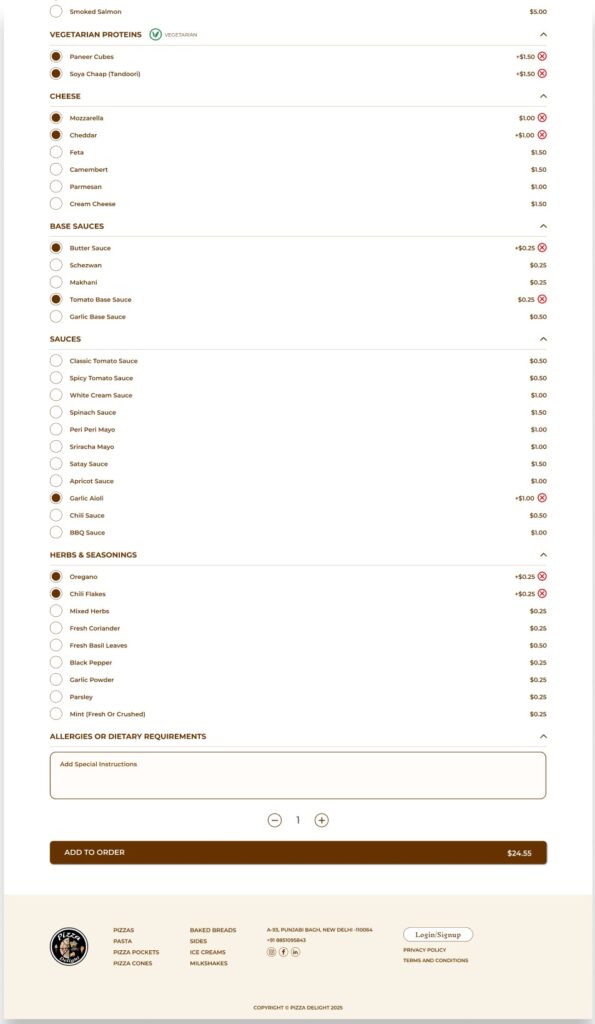
A dynamic visual builder that lets users customize crusts, sauces, toppings, and sizes with real-time visual previews and price updates

Introduced filters like “Spicy,” “Desi Fusion,” “Vegan-Friendly,” and “Best for Parties” to guide decision-making.

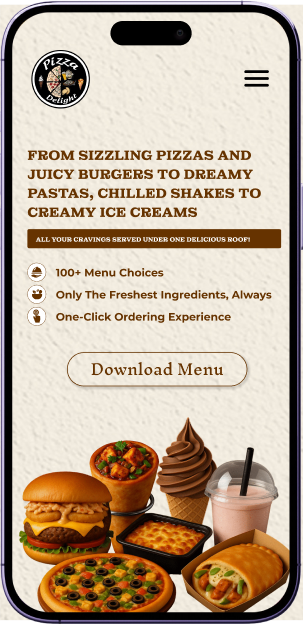
Designed with thumb-friendly zones, quick actions, and one-tap reordering to ensure fast, delightful ordering on the go.

Clean, step-by-step interface with delivery time estimate, address auto-fill, and multiple payment options.

for pizza delight

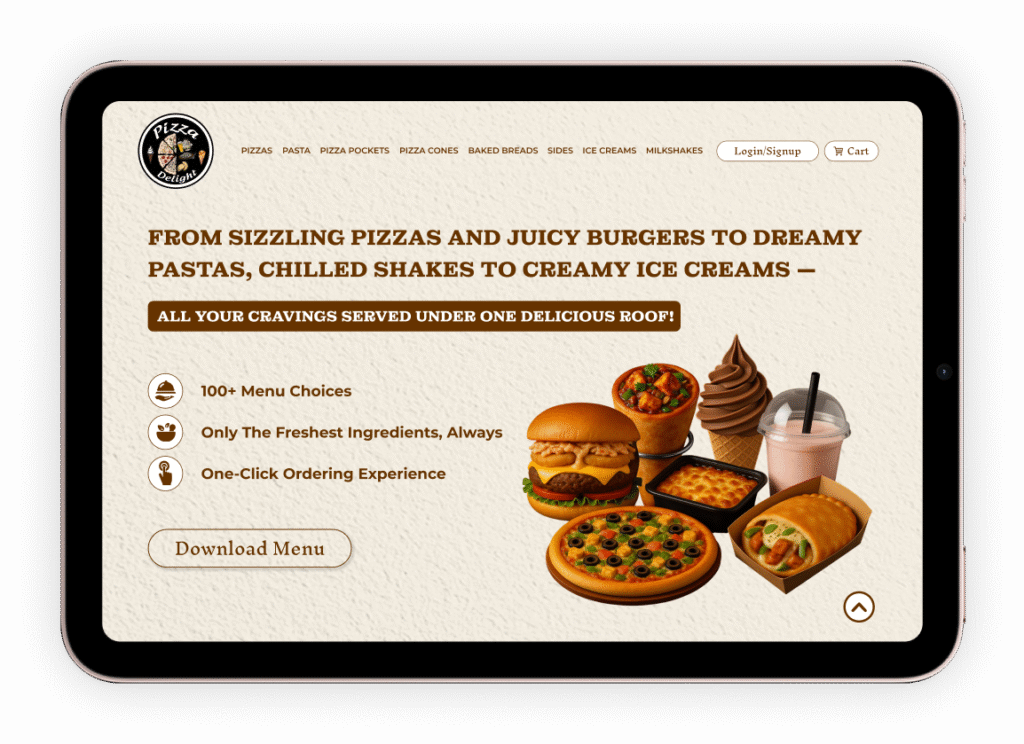
Introduced a visually rich that showcases each pizza with high-resolution images, ingredient highlights, and real-time customization options.

Integrated past order recall, combo suggestions, and time-based offers to boost average order value and loyalty.

Minified assets, optimized loading speed, and implemented SEO best practices to enhance visibility and reduce bounce rates.

Rebuilt the checkout process to reduce steps, add address auto-fill, and support multiple payment gateways for frictionless ordering.